


2026 CSS Escape: Experiments around AI Futures Engineering
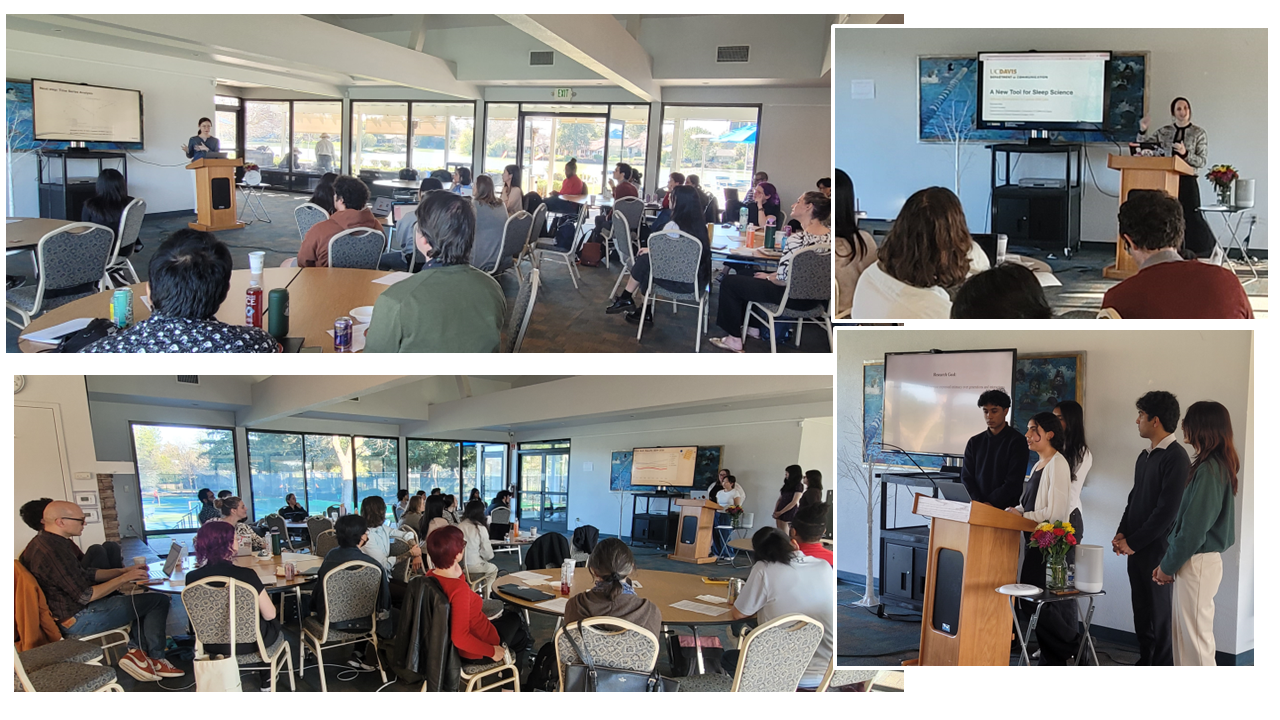
On Friday, February 20, 2026, the UC Davis Designated Emphasis in Computational Social Science hosted its annual daylong conference at the scenic Stonegate Country Club in Davis, CA. Over 70 scholars attended, showcasing 25 presentations from researchers spanning 9 different disciplines: Communication, Sociology, Philosophy, Computer Science, Education, Public Health Sciences, Information Science, Physics & Geology, and Political Science. The audience was composed of approximately 60% PhD students, 15% undergraduate researchers, 15% faculty, and post-docs and industry scholars, reflecting the broad and inclusive reach of computational social science at UC Davis.
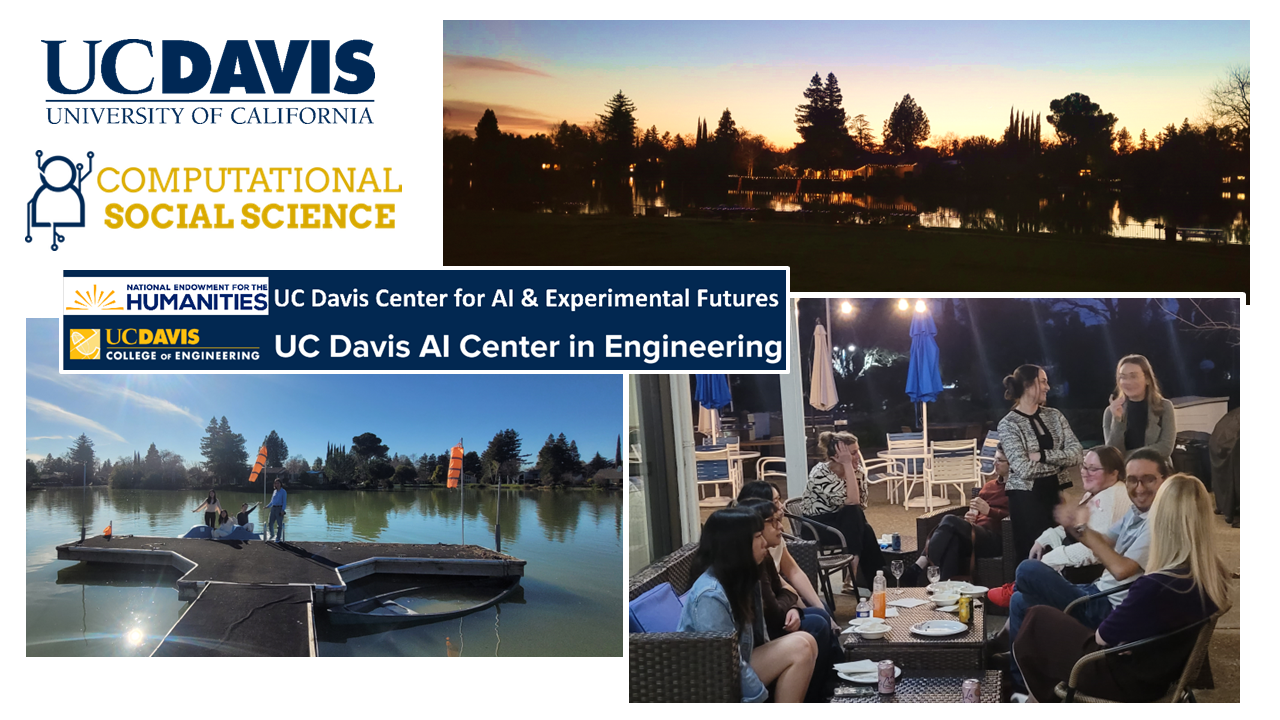
The UC Davis Center for AI and Experimental Futures (CAIEF) and the UC Davis AI Center in Engineering co-sponsored the event and together offered $2,000 in prize money for the best AI research presented. The event’s structure was carefully optimized for interactivity and meaningful exchange. Across five thematic sessions, each presenter delivered a focused 7-minute flash talk, followed by a collectively decentralized 25-minute Q&A period designed to facilitate deeper, personalized one-on-one conversations between presenters and audience members. This format allowed attendees to engage directly with the research that resonated most with them, fostering the kind of substantive dialogue that traditional conference formats often lack.

“The CSS Escape was an excellent opportunity to meet with computational scholars across UC Davis and get much needed encouragement and feedback on my research at a time of rapid change in text analysis driven by AI/LLMs. I left with plenty of new ideas for my project and people to potentially partner with on future projects,” said Patrick Wade (PhD Student, Dpt. of Sociology). Jason Singson (PhD Student, Dpt. of Public Health Sciences) added: “Personally, computational methods have been something I felt intimidated by, where to begin and incorporate in my field of public health. This conference really helped me demystify generative AI within research.” Salman Khawar (PhD Student, Dpt. of Communication), summed up the ethos of the event: “The best part is that the CSS Escape provides a platform for researchers to even showcase their half-baked research ideas in front of a diverse, well-informed, and engaged audience."
The event was equally transformative for undergraduate researchers, like Paavana Shankar: “This was my very first time presenting a research idea of my own. I’m glad I had the opportunity to talk about a subject that I’m passionate about.” The conference’s collaborative atmosphere extended well beyond the formal sessions. Alex Lau (PhD Student, Dpt. of Philosophy; AI Ethics Lab) noted: “Our lab was super excited and grateful to be able to join, especially since it is the first time we’ve presented to such a large audience! Many from our lab stayed for the happy hour after and had a good time discussing our projects with people afterwards which will really help with improving and fine-tuning our topic.”

The DE CSS Executive Committee, including Prof. Martin Hilbert (DE CSS Chair), Prof. Seth Frey (Chair Membership), Prof. Shelley Blozis (Chair Education), and student representatives Jennifer Krebsbach (PhD student, Sociology), Rachael Kee (PhD student, Communication), and Jane He (PhD student, Psychology) hosted this fully catered event, including lunch, snacks, and a happy hour reception for all participants.
The quality of AI research presented at the conference was exceptional, and the co-sponsoring AI centers recognized outstanding work with the following awards:
Best AI Research Award:
Antoinette Banks (PhD Candidate, School of Education): Racially Differentiated Linguistic Patterns in IEP (Individualized Education Program) Documents
Best AI Innovation Awards:
Patrick Wade (PhD Student, Dpt. of Sociology): The Logic(s) of a Dissent: Federal Reserve Decision-Making
Jason Singson (PhD Student, Dpt. of Public Health Sciences): Sensemaking During Law Enforcement Use-of-Force
Rachael Kee (PhD Candidate, Dpt. of Communication): A Year in the Making: Introducing Inoxity, an app to track sleep
Ashley Hanmore (Undergraduate Researcher), Crace Macasaet (Undergraduate Researcher), Rachel McKenzie (PhD student, Dpt. of Communication), Sofia Rhea (PhD student, Dpt. of Communication), and Allyson Snyder (PhD student, Dpt. of Communication): Sex, Drugs & LLMs: LGBTQ+ Adolescents & Sexual Health
Paavana Shankar (Undergraduate Researcher), Katherine Ong (Undergraduate Researcher), Deborah Tiner (Undergraduate Researcher), Sofia Rhea (PhD student, Dpt. of Communication), and Allyson Snyder (PhD student, Dpt. of Communication): AI Integration In Medical Care for Menopause
Mateo Mijares (Undergraduate Researcher, AI Ethics Lab), Ayushi Kishore (Undergraduate Researcher, AI Ethics Lab), and Qiannan Li (Assistant Professor, Dpt. of Philosophy): AI and Moral Reasoning
Jack Jacobs (Undergraduate Researcher, AI Ethics Lab), Alex Lau (PhD student, Philosophy), Alexis Woods (Undergraduate Researcher, AI Ethics Lab), Amani El-Sheikh (Undergraduate Researcher), Daezhon Gilbarg (Undergraduate Researcher, AI Ethics Lab), Jackson Glaze (Undergraduate Researcher, AI Ethics Lab), Lillian Zhang (Undergraduate Researcher, AI Ethics Lab), and Qiannan Li (Assistant Professor, Dpt. of Philosophy): The Interesting Gap in AI Companions for Older Adults
2025 CSS Escape: Engineering our Experimental AI Futures
Emily McKinley (PhD student, UCD CMN), Abdulaziz Alhumaidy, Jingwen Zhang: Using LLMs to Synthesize Human Responses in Persuasive Context
Jennifer M. Krebsbach (PhD student, UCD Sociology): Analyzing Gendered Job Description Narrative Outputs by LLMs
Best Innovation Awards:
Allyson L. Snyder (PhD student, UCD CMN), Millie Fong, Ana Cervantes, Katherine Ong: Too Scared to Talk to Peers, Too Efficient to Meaningfully Engage with a Chatbot: AI for Math Tutoring
2022 Computational Social Science Synergy Retreat

| agenda_1st_css_synergy_retreat_2022.pdf |